
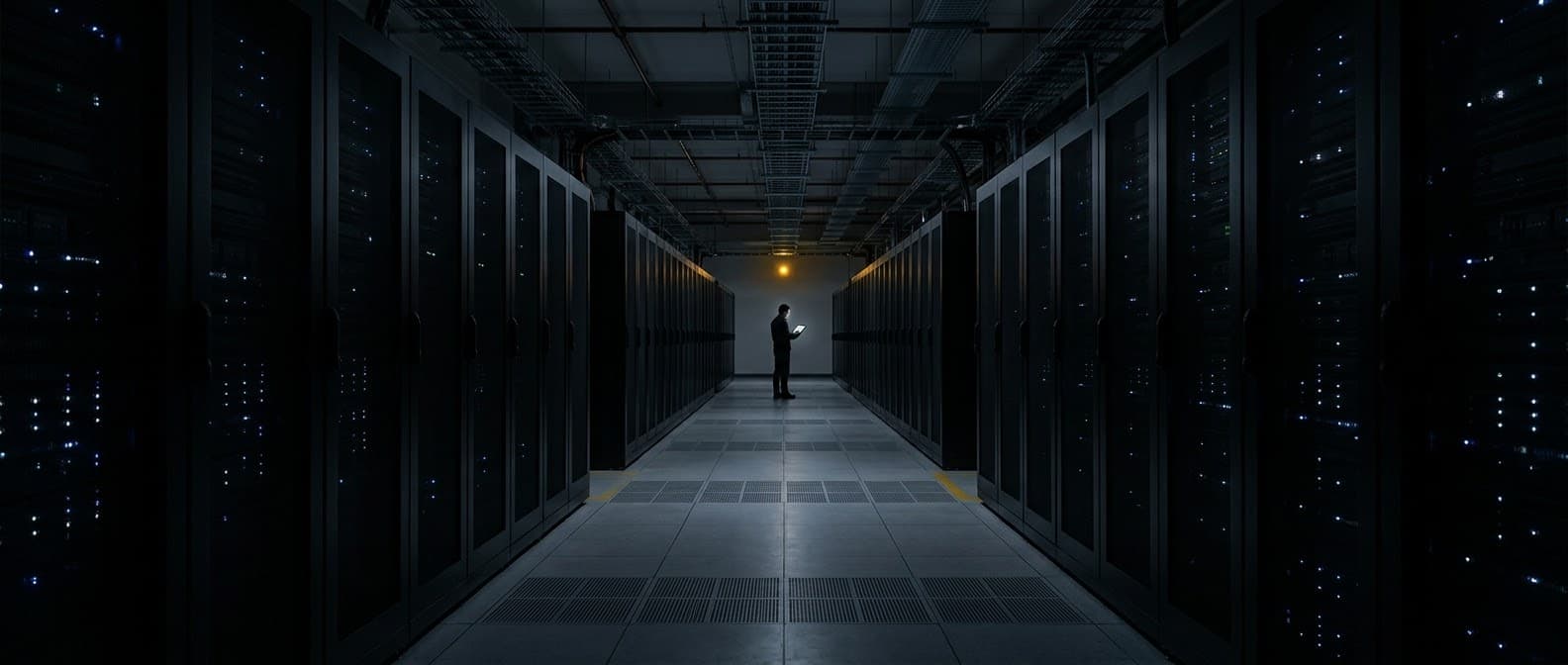
Built first for data centers, where the turnover deadline is hardest.
Hundreds of machines, five levels of commissioning, a go-live date that does not move, and an owner who is paying for verification they cannot witness. Veristep was shaped on exactly this job: the register knows what every UPS, generator, chiller and switchboard owes, and a step stays open until the proof is there.
It knows what every machine owes before anyone has done a day's work.
One QA firm's own operating guide calls for seventeen logs and over two hundred kinds of document across the equipment on a data hall. That guide is where Veristep's defaults come from. Here is the shape of it.
UPS
Factory test report, delivery inspection, battery install record, functional test at L4, integrated test at L5
Generator
Load bank report, fuel system pressure test, start-up report, transfer test with the ATS
Chiller / CRAH
Refrigerant charge record, vibration and alignment readings, controls point-to-point, functional performance test
Switchgear / ATS
Torque readings on every termination, insulation resistance, relay settings, transfer timing
Fire suppression
Hydrostatic test, detector mapping, release sequence witnessed, room integrity test
BMS / controls
Point-to-point verification per point, trend confirmation, sequence-of-operations test
Illustrative — the defaults are yours to edit, and the full list comes in the free register template.
L1L2L3L4L5earned in the field, worn on the machine.
The standard commissioning sequence (CSI 01 91 00), taken in order. A level opens only when the one before it has all its proof, and the colour tag on the machine matches the colour in the record.
No tag yet. The L1 checklist localized to the job and the L2 to L5 scripts drafted before the machine arrives.
Red tag. The vendor's test witnessed and its report on the record before the unit ships.
Yellow tag. Delivery inspection, anchors, terminations, torque — each with its photo or reading.
Blue tag. Pre-functional checks complete; the unit is live and safe.
Green tag. The functional performance test passed, attributed to who ran it and who witnessed.
Teal tag. The system tested with everything it depends on — the pull-the-plug test — and accepted.
If it can be checked, it can be templated.
The system underneath — a register that knows what is owed, a step that stays open until the proof is there, a package that builds as the work closes — does not care whether the machine is a chiller or a press, or whether the room is a data hall or an operating theatre. What changes is the template.
Hospitals and life sciences
Rooms with pressure, air-change and integrity tests; equipment with calibration records; disciplines signing off before construction. The register knows what each space owes.
Schools, universities and campuses
Many buildings, one owner, the same record: handover moves each site to the owner's workspace, and the maintenance routines start from the commissioning data.
Plants and industrial
Factory acceptance, install, energize, functional — the same L1 to L5 sequence, on presses and conveyors instead of UPS units. NCR and CAPA for the non-conformances.
Utilities and energy
Switchgear torque, relay settings, protection tests — attributed to who ran them and who witnessed, with the readings and the ranges on the record.
Quality assurance is the same job on every site. A hold point is a hold point whether the machine is a UPS in a data hall, an air handler over an operating theatre or a switchboard in a plant: what is required, the proof it takes, who signed and when. Veristep runs that job the same way on all of them — the register knows what is owed, a step stays open until the proof is there, and the package builds as the work closes. Bring your kind of job to the trial: your discipline’s templates are in the workspace from the first minute, and anything you write once stays in the library.
The owner's spec, or the firm's bid.
For the owner or owner’s rep
Put Veristep in the specification and every firm on the job — the commissioning agent, the electrical and mechanical subs, the controls contractor — records the proof the same way into one record you read as it fills in. A single failure at turnover is expensive; a record that cannot say “ready” until the proof is there is how you avoid finding out late.
For the commissioning firm
Walk into the interview with a live data-hall project instead of a sample binder. Show the owner the register, a check that will not close, and the package building itself. Unlimited people, so the subs and the owner work in your record instead of emailing you. And the same record runs the firm behind the job — the bid priced to a margin, the crew cleared before they mobilize, the hours that bill from proven work.
You bring your functional test scripts — written once as templates, reused on every job — and Veristep holds every step to them. BMS trend data comes in as evidence on the step that asks for it. Veristep keeps the record and the rule, and runs alongside the GC’s platform and your test equipment. Your bid, your crew and your billing live in that same record, so nothing is re-keyed into a separate accounting spreadsheet; invoices go out through the QuickBooks you already run.